Chapter 1. Why We Stay When We Already Know
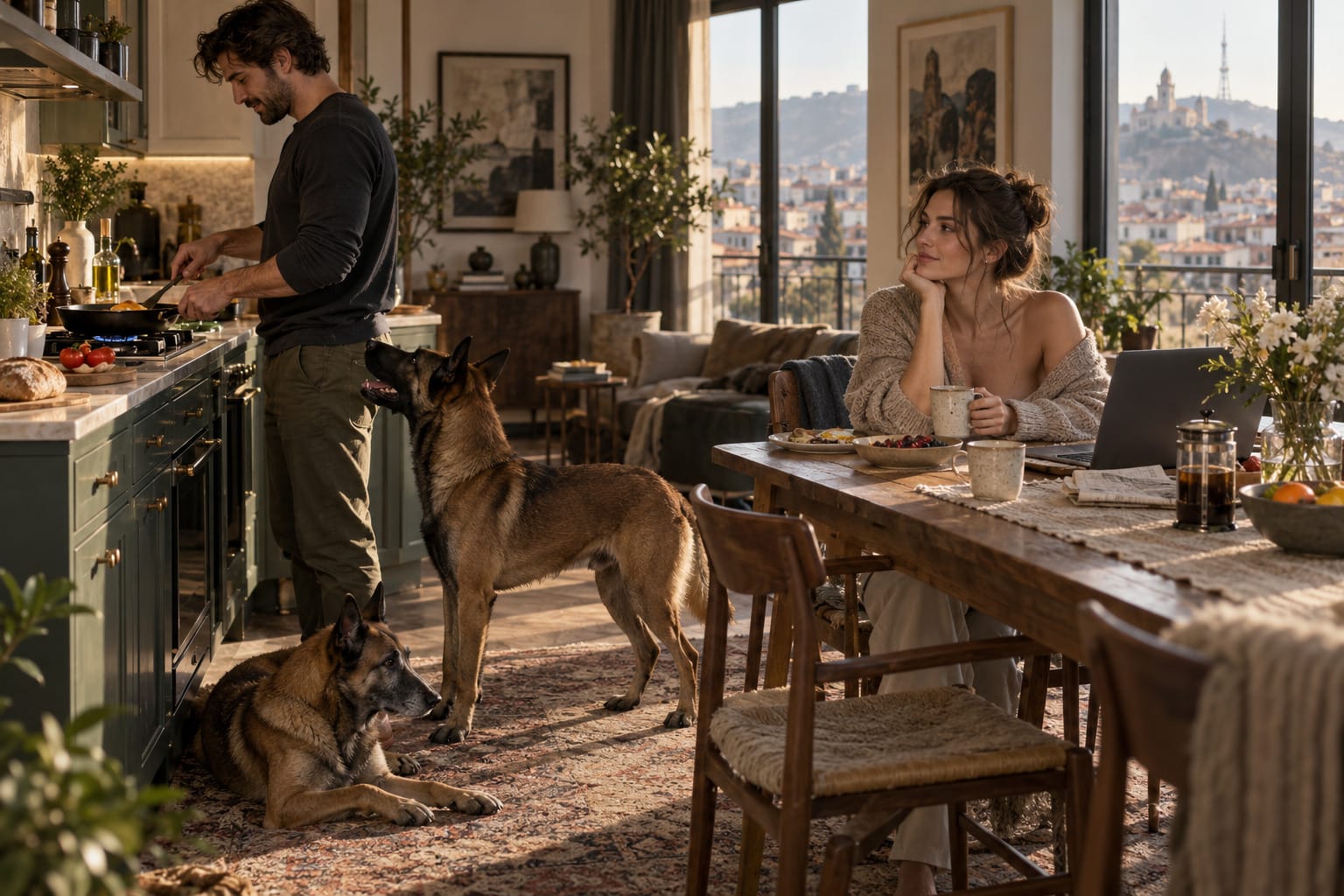
The morning began with Thor deciding he wanted to come into my bedroom. First he pushed the door with his nose, then scratched at it with one paw, then tried the nose again, and when it became clear that the authorities had no intention of entering negotiations, he lay down in the corridor and let out the sort of sigh you would expect from someone who had spent the last few years supporting the entire family, paying for the house and asking for one small thing for himself for the first time in his life. Thor was a huge young Malinois and officially my dog, although he had rather modern ideas about family loyalty. The moment Max picked up meat, cheese or even a vaguely suspicious bag that might theoretically contain something edible, Thor transferred his allegiance without the slightest moral hesitation to the parent offering the stronger economic outlook. Nora, Max’s dog, was almost twice his age and never chased anybody for food. She had worked out the essential truth about humans long ago: there was no point making an effort because sooner or later somebody would drop something.
I opened the door. Thor charged in, checked whether anything interesting had happened to me overnight and immediately left for the kitchen. Loyalty was all very well, but breakfast had started.
Max was standing at the cooker.
“Why are you up so early?”
He looked at the clock.
“Twenty past eight.”
“Exactly.”
“What’s wrong with that?”
I looked at him.
“Nothing.”
I had no intention of wasting energy proving to Max that eight twenty in the morning was, for him, practically dawn. Years of family life had taught me to save my strength for arguments that actually mattered, and besides, the man was making me breakfast. I try not to quarrel with people who are currently responsible for my eggs.
We had three bedrooms: my son had one, Max had one and I had one. There was no great marital drama behind the arrangement. Max simply slept as though he had been assigned a secret mission every night. He would wake up, go downstairs for water, come back, remember his phone, get up again, check the front door, lie down, turn over half an hour later, then turn over again, and somehow appear perfectly fresh in the morning. By his third nocturnal expedition I could begin to resent even the neighbours, because they were almost certainly asleep and therefore clearly doing it to spite me.
At some point we moved into separate rooms and discovered that nothing terrible happened. The marriage survived, my son appeared to suffer no visible psychological damage, and I finally began to sleep. After that I had no desire to return to a shared bed simply to demonstrate marital unity. My son, incidentally, cared less about the whole arrangement than anybody. He had his own room, good internet and a door he could close. His parents’ sleeping arrangements interested him about as much as household gas tariffs.
Max and I had met when we were already adults. We had both been married before, I had a son, and for some reason I believed that the second time around people ought to understand a little better whom they were choosing and why. We were adults, after all. Experienced. Surely we must have learned something. Now we lived in Tbilisi, rented a large house, raised two Malinois and believed we knew each other very well.
Max put a plate in front of me.
“Eat. I’ll take him to school, then I’m going to the market.”
“Get tomatoes.”
“I will.”
“Good ones.”
“Anna, I know how to buy tomatoes.”
He said it more sharply than I expected, and I looked at him properly. We were, after all, discussing tomatoes.
“I was only saying.”
“And I was only saying I’ll get them.”
For a few seconds neither of us spoke.
I was about to ask where that tone had come from when my son came downstairs, sleepy, dishevelled and already holding his phone, and the morning immediately returned to more familiar business.
I stopped thinking about it too.
“What’s for breakfast?” he asked.
“Eggs,” Max said.
“Can I just have the white?”
“You can.”
My son brightened.
“Really?”
“Of course. Take the eggs, separate the white and cook it.”
He sat down.
“Fine. I’ll eat this.”
I laughed.
Twenty minutes later Max was standing in the hall checking him item by item.
“Got your bag?”
“Yes.”
“Phone?”
“Yes.”
“Jacket?”
“I’m not cold.”
“I didn’t ask whether you were cold. Take the jacket.”
I finished my coffee and watched a grown man and an almost grown boy perform the same morning play they had performed countless times before, both of them fully aware not only of their own lines but of the other person’s as well.
Max drove my son to school almost every morning. Then he went to the market, stopped somewhere else on the way, bought groceries, dog food, everything I had remembered to ask for and usually another couple of things I only remembered once he was already home. He did a great deal around the house and rarely seemed to count any of it. After a few years together, love begins to look rather strange. A person knows the dog food is running out, remembers where the good meat is sold and goes to pick up your child from school without needing to be reminded. It is not the sort of thing you boast about to your friends at the beginning of a relationship, but later you discover that life works rather better with this than it does with rose petals.
Max shouted from the door:
“What kind of cheese?”
“Any.”
“You’ll say it’s the wrong one.”
“Then why are you asking?”
“So it’s on record that I checked.”
“You’ve been living with a lawyer for too long.”
“I think so too.”
He smiled.
So did I.
And whatever irritation had been there that morning disappeared.
The car pulled out of the drive and I was alone. I loved those few hours when nobody opened the door saying, “Just one second.” In family life, that is one of the most dangerous phrases in existence. It is almost never followed by one second, one question or anything remotely brief.
I opened my laptop and started working.
An hour later my phone beeped.
Max had sent me a photograph of tomatoes.
There were about twenty red tomatoes in the picture, and the only thing I could establish with confidence was that they were, indeed, red.
“These?”
“Are you asking me to judge their flavour from a photograph?”
“You said good ones.”
“Max, I can confirm the colour.”
“I’m buying them.”
A second message arrived almost immediately.
“No complaints afterwards.”
I smiled.
“Complaints are always accepted. You should know that by now.”
He sent a laughing emoji.
By evening it turned out that the tomatoes were excellent.
The three of us had dinner together. Max and my son were arguing about some car neither of them owned, which did nothing to prevent either of them from holding firm and completely incompatible opinions about its engine. I tried a tomato.
Max looked at me at once.
“Well?”
“What?”
“The tomatoes.”
“Fine.”
“Fine?”
“Very respectable representatives of their species.”
“I told you.”
I decided not to give him any more than that. One victory in an evening was quite enough.
After dinner my son went upstairs, the dogs settled in the sitting room, Max picked up his phone and I opened my laptop beside him. The house went quiet. It was an ordinary evening, the sort when nobody was leaving, nobody was having a serious conversation and tomorrow seemed likely to look very much like today.
A few minutes later Max said:
“Anna.”
“Mmm?”
“The landlord messaged.”
I kept looking at the screen.
“What does he want?”
“To talk.”
“About what?”
“Didn’t say. Wants to come by tomorrow.”
Now I looked up.
“Fine. Let him come.”
“I told him we’d be home.”
“Okay.”
Max went back to his phone.
I went back to my work.
I had things to finish, my son was upstairs in his room, Thor had once again dragged a branch of completely unreasonable proportions into the garden, and I already knew that my promise to go to bed early would not survive the evening.
The fact that our landlord wanted to talk to us interested me least of all.
Between Us
Other people’s relationships are remarkably easy to understand. Especially once you already know how the story ended. Then it becomes obvious what the woman should have noticed, what she should have said and after which conversation she ought to have left.
When you are still living inside your own story, things are much less tidy. We do not always stay because we understand nothing. Sometimes it is the opposite. We understand too many things at once. That the way he spoke to you just now was unpleasant. That he made you breakfast that morning. That sometimes he irritates you beyond belief. That ten minutes later he will take your child to school. That by the evening you will probably be laughing together again. The bad parts of a long relationship rarely turn up in a form that makes you look at them and think, right, that’s it, time to leave. They are usually mixed in with everything good, familiar, funny and dear, and then try explaining to yourself exactly when all of it stopped being simply normal life.
That evening Max told me the landlord was coming over the next day, and I said, “Okay.”
I thought we were simply going to talk about the house.
You Can Love Someone and Still Not Want to Live With Them
Chapter 2 of The Life Between Staying and Leaving
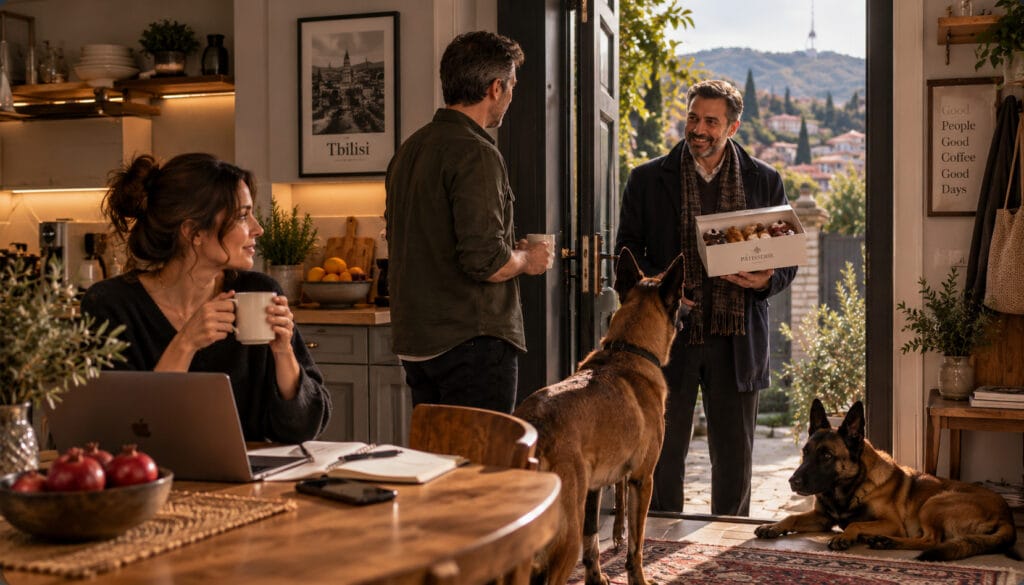
The landlord offers Anna and Max the chance to buy the house they already call home. Max starts planning. Anna starts making a list.