

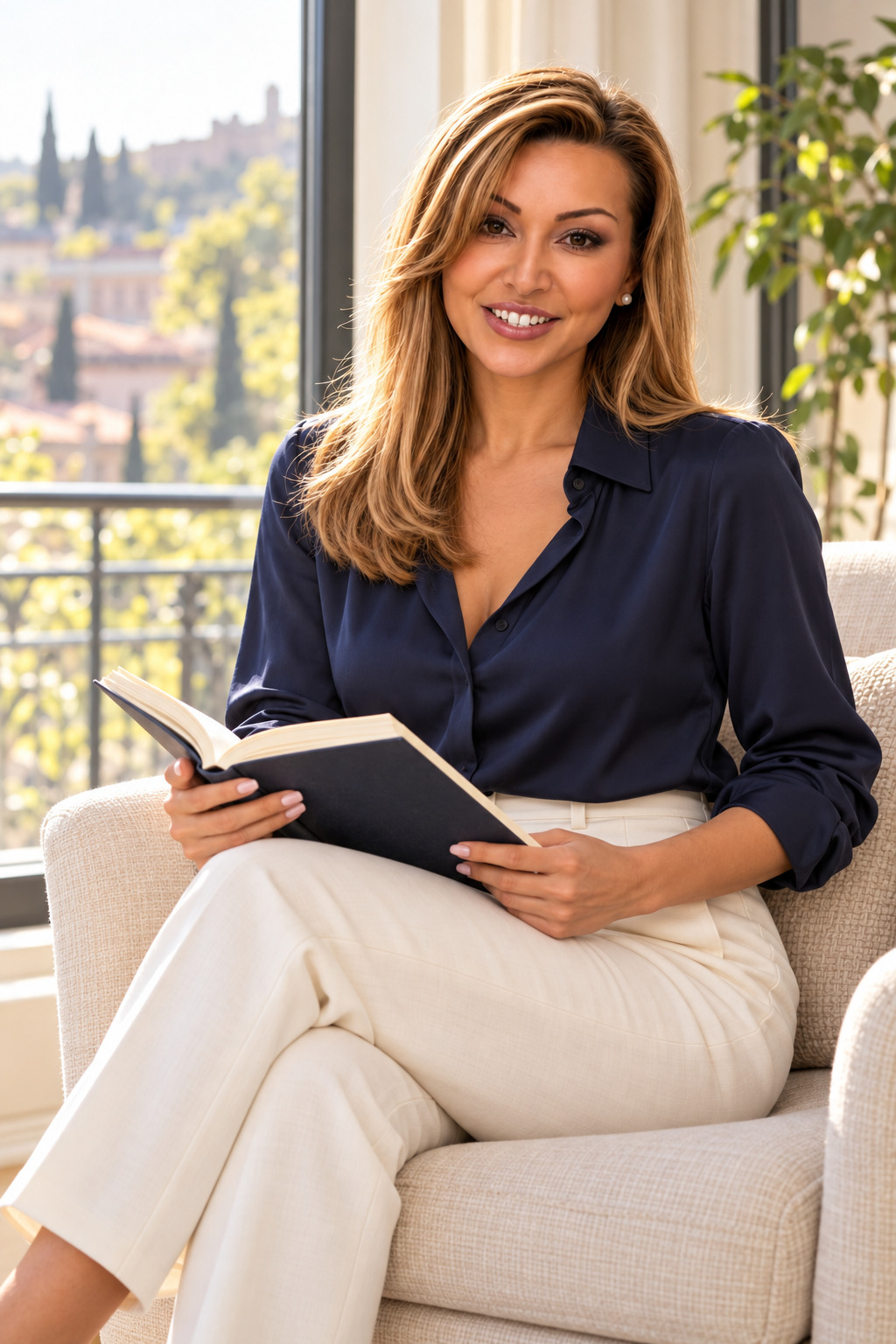
Memoir Ghostwriter:
Your Story in Russian and EnglishYour family’s story in two languages: Russian for older generations, English for children and grandchildren.
I’m Olga Sverchkova, a writer and lawyer. I turn your memories, letters, photographs and documents into a book about your life, family or an experience you want to preserve. You tell the story; I shape it into a manuscript in Russian, English or both, keeping your voice. I write every chapter myself, and you work with me throughout. A few lines about your idea are enough for a first message. There is no need to send a family archive or personal documents yet.
One book, two languages
When a story has yet to become a book

Who will write your book
I’m a recipient of the Golden Pen of Russia award and the author of a legal column whose title translates as A Lawyer to the Rescue. Nobody Told Me About Tbilisi has been published, and I’m currently working on The Alibi of St Petersburg, a crime novel. You can read the prologue and first five chapters of Nobody Told Me About Tbilisi for free to get a sense of how I write. Your book will sound different: when you read the manuscript, you should recognise yourself.
What kind of book can I write for you?
A memoir, a collection of memories, the story of your working life, or the events and decisions you want to make sense of and preserve. It doesn’t have to start at birth: sometimes one period of a life offers more for a book than an attempt to fit in every date.
A family history
A book about parents, grandparents or several generations of your family. It can draw on different people’s memories and everything that remains in the family archive. Separate letters and accounts become one story the family can read from start to finish.
A book about an experience
For the story of a company, its founder or a family business, there is a separate service: a corporate history book.
How the manuscript takes shape
What does a memoir ghostwriter cost?
Author Olga Sverchkova

Frequently asked questions
No. You can tell the story in your own words. Shaping it and finding the right language is my part of the work.
Yes. You can commission a book in English only or Russian only. If you decide to add a second language version later, we agree its fee and timetable separately.
We piece the story together from your memories, relatives’ accounts, letters and documents. Where something can’t be confirmed, we decide together how to say so honestly in the book. Nothing invented is passed off as fact.
Yes, as a family keepsake or as a gift to the person it’s about. We’ll agree in advance which material goes into the book and how to write about other people with care.
Yes. Relatives’ memories, letters, photographs and documents can form the basis of the book. We discuss conflicting accounts, do not present unconfirmed details as facts, and agree how to write with care about people who can no longer clarify their side of the story.
Yes. The person the book is about can tell the story directly, or you can help, if that’s easier for them. We agree how it will work at the start.
Yes. I live in Tbilisi. In English, we communicate in writing, so you can answer in your own time and keep a record of everything we agree. No calls are needed.
We agree in advance how names will appear on the cover and in the book. I can work without being credited. I transfer the exclusive rights to the text to you on the terms of our agreement; the right of authorship is a personal right and, under Russian law, cannot be transferred. Without your consent, I won’t disclose our collaboration or include material from your book in my portfolio, and we record this in the agreement.
Mention your date in your first message, and I’ll tell you whether I can prepare the manuscript in time.
If a shorter piece suits the story
Not every story needs a whole book. Sometimes an essay, an interview, a profile or an article is the better form. I work with these formats too, and the principle is the same: the piece keeps the voice of the person it’s about. We agree the subject, length and intended publication before work begins. You can find out more on the Bylined Articles page.